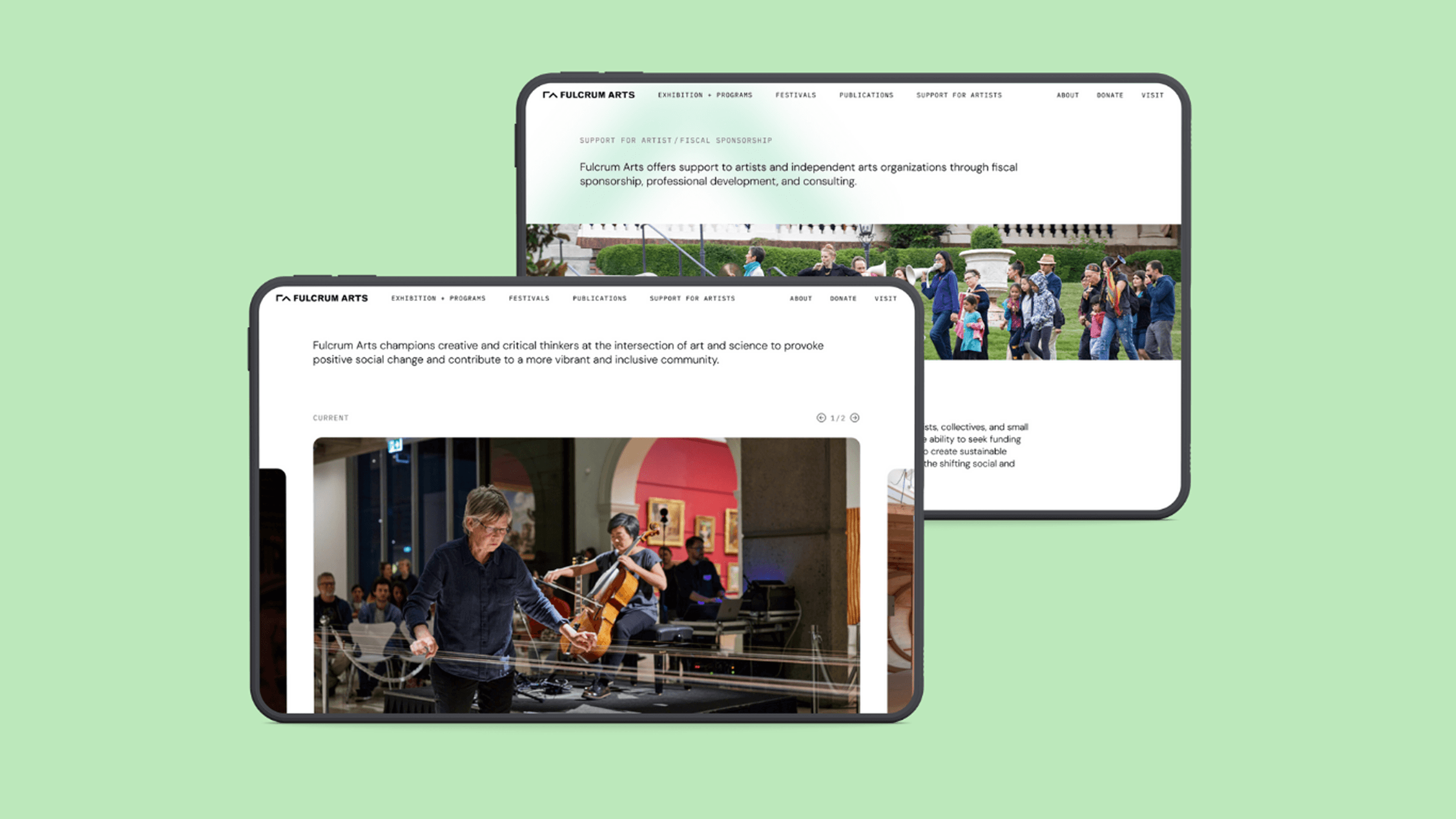
The Challenge
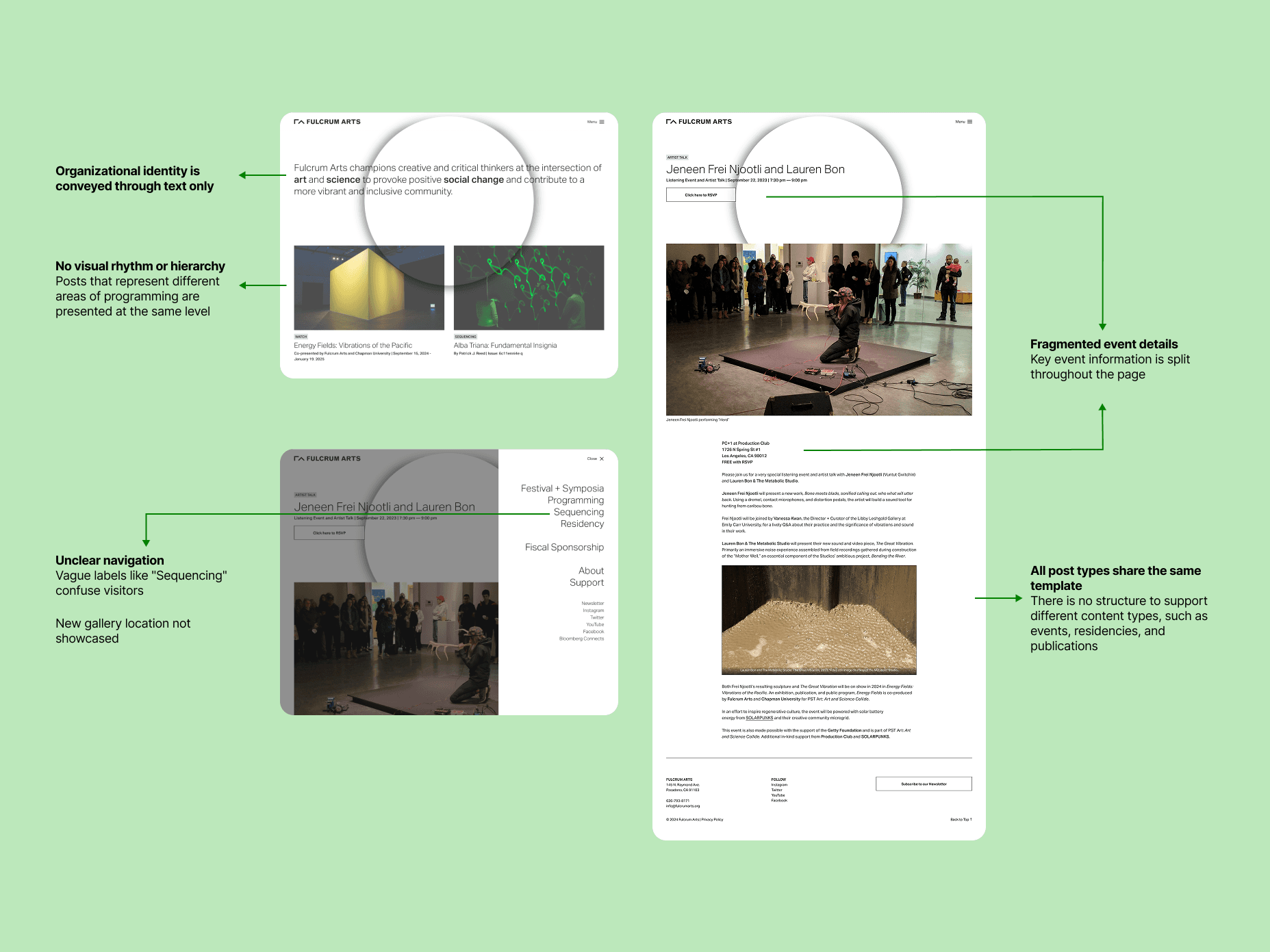
As a nonprofit running exhibitions, festivals, artist residencies, publications, and fiscal sponsorship programs, Fulcrum Arts needed their main public platform to clearly communicate their multifaceted mission. Instead, the site left visitors confused about what the organization actually does.
Fulcrum Arts does a lot - but the website didn’t make that clear.
The Process
1. Aligning on Identity & Message
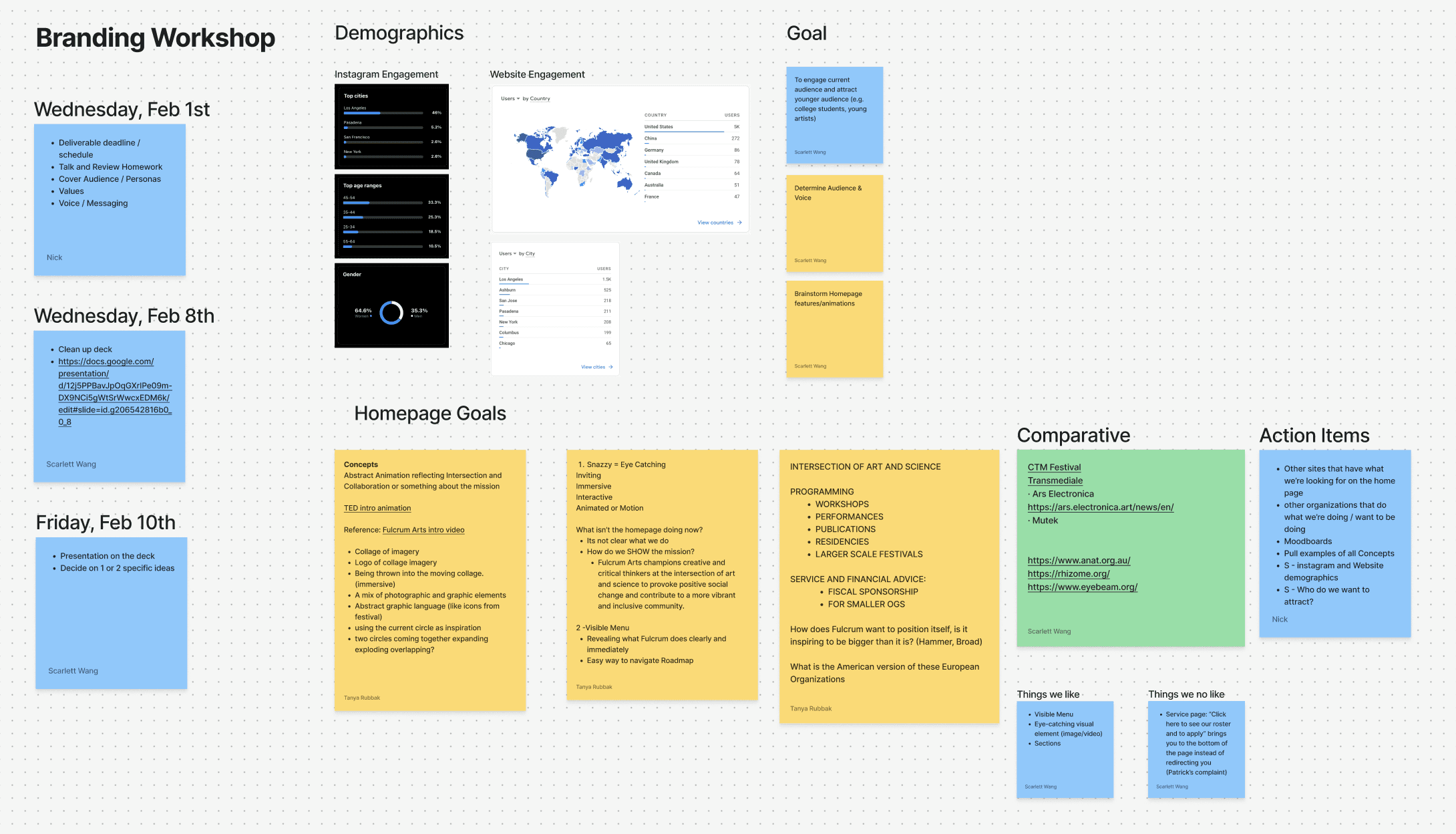
Before diving into the redesign, I facilitated workshops with the full team to align on organizational identity and messaging.
What we did:
Analyzed our audience: Who we currently reach vs. who we want to reach
Audited our language: How we describe each program and why it aligns with our mission
Gathered inspiration: Studied effective websites of art and cultural organizations to understand what makes organizational storytelling work
Outcome: Clear messaging framework and shared vision for the redesign.
Information Architecture Redesign
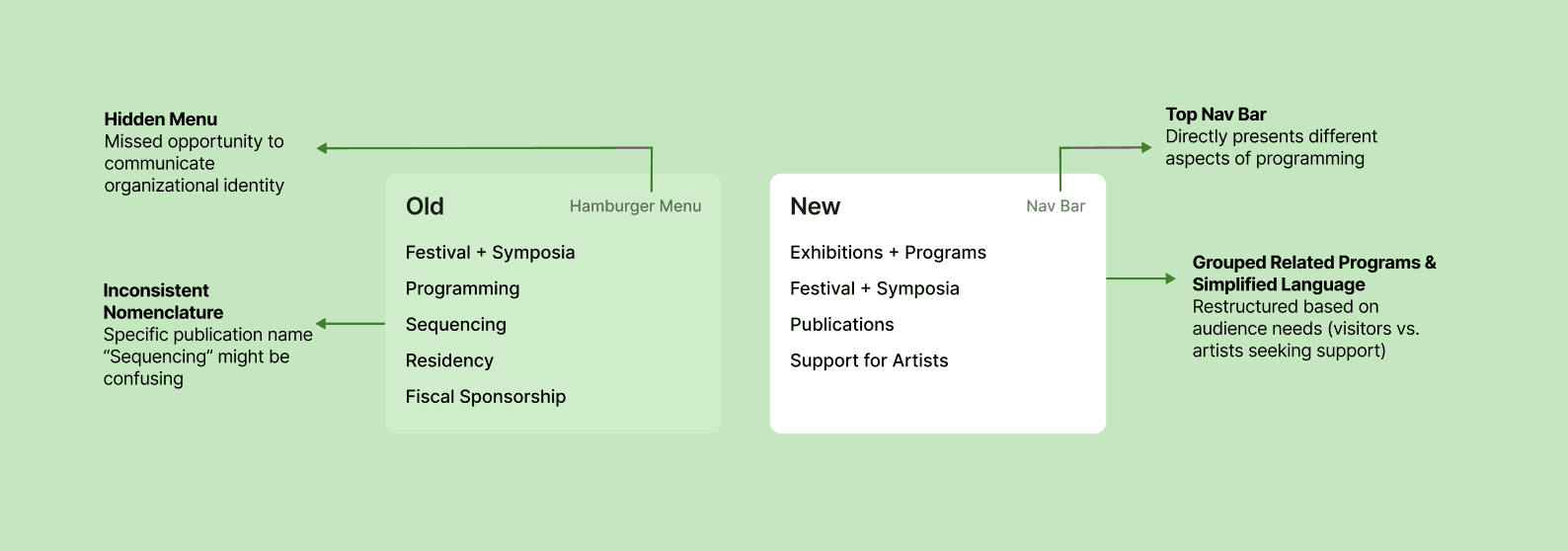
Working with the creative director and PR consultant, I restructured the site navigation to create clear, logical, and user-frienly categories.
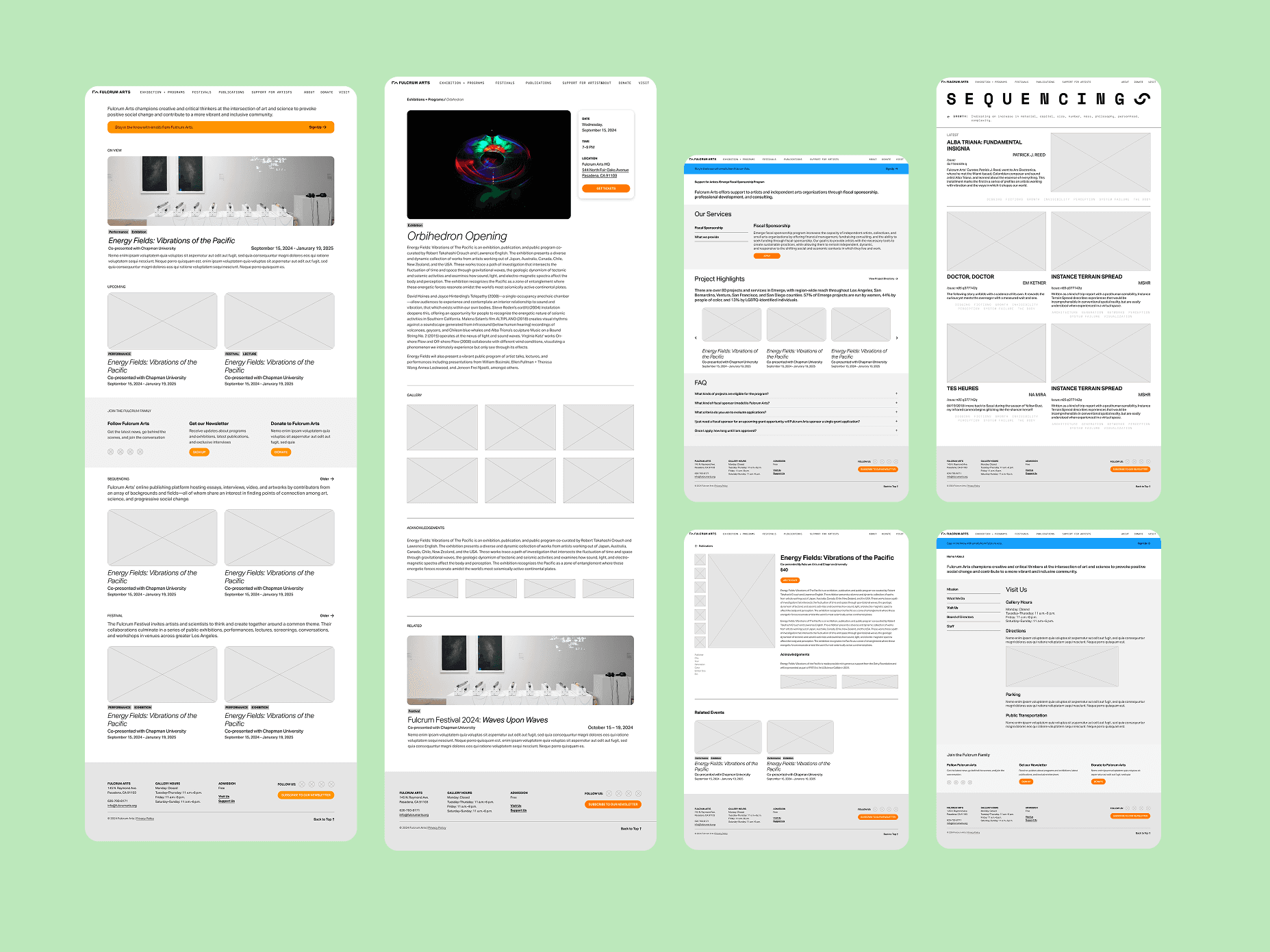
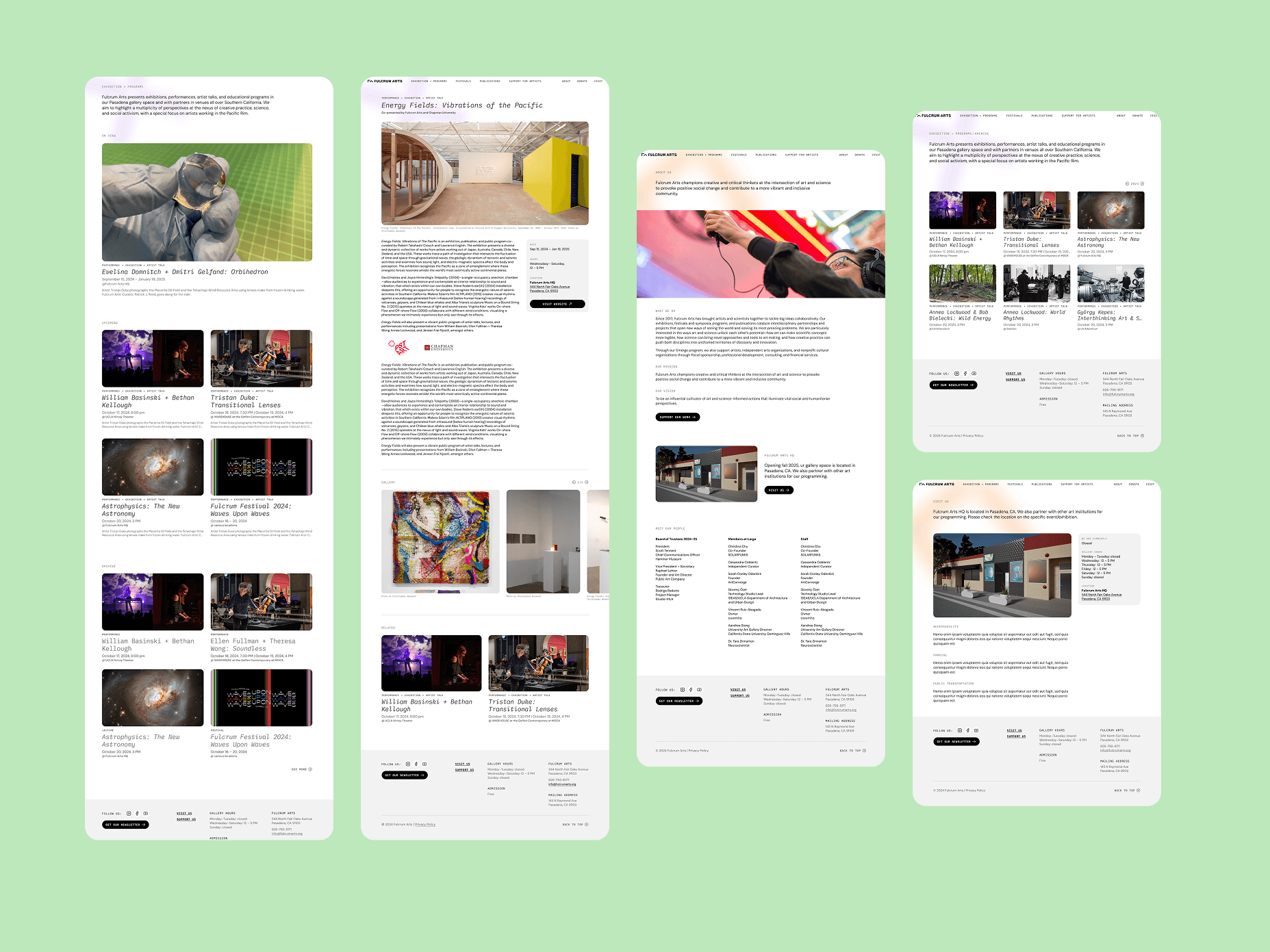
3. Visual Design & Prototyping
I collaborated with graphic designer to develop a visual system, then translated it into website designs - starting with wireframes and building up to interactive prototypes. After presenting to stakeholders, I iterated based on their feedback to ensure the final designs served both organizational goals and user needs.
Development Handoff & Quality Assurance
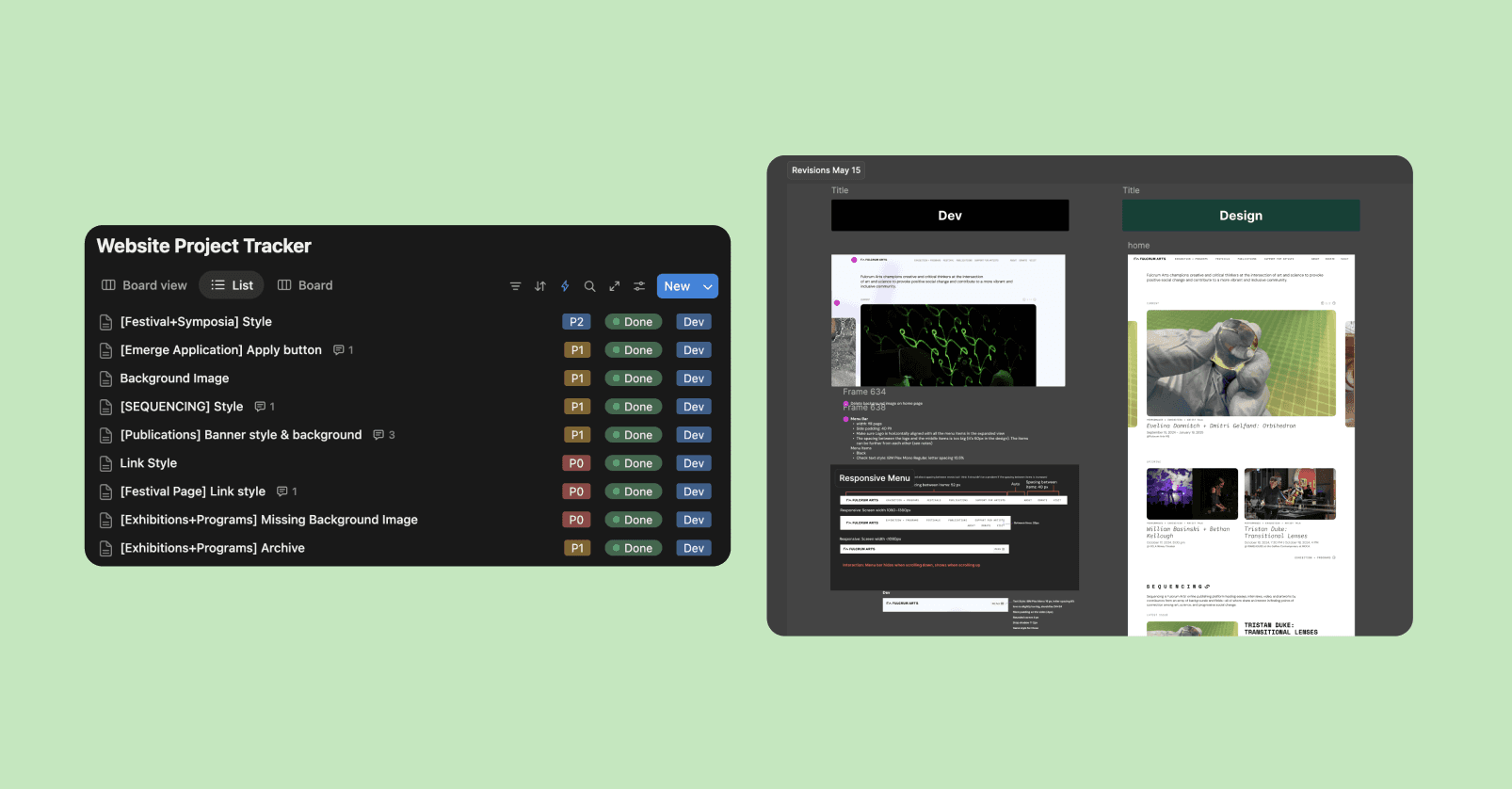
I managed the handoff to our WordPress developer and led testing to ensure the final site matched our design vision, using Notion to keep track of all outstanding tasks.
QA Process:
Testing all pages and interactions
Cross-checking with design and fine tune UI inconsistencies
Coordinated review sessions with curatorial team
Documented and communicated necessary adjustments
Approved final launch
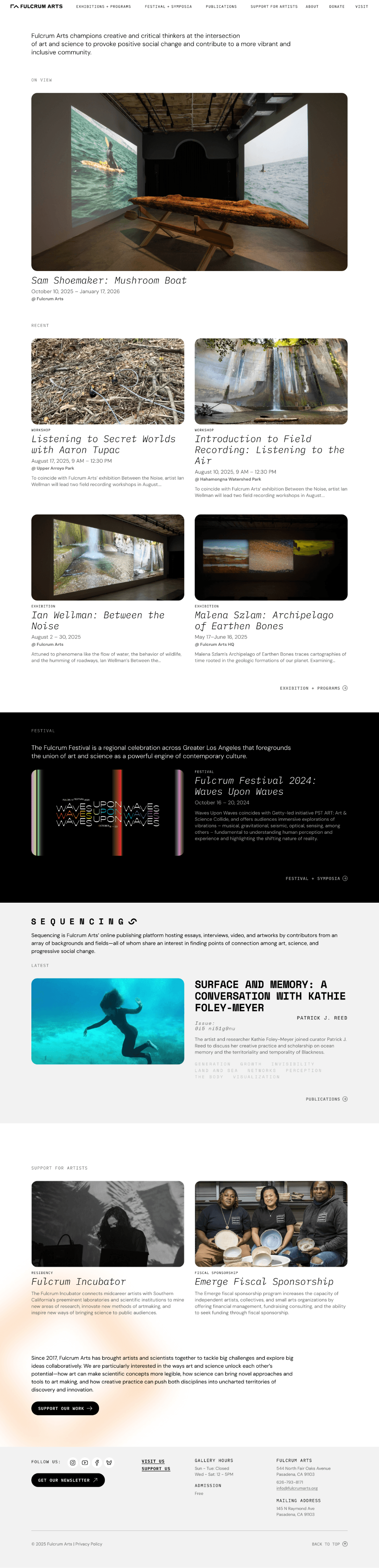
Final Design
What I Learned
Design is as much about people as the product
Coordinating between PR consultants, graphic designers, curators, and leadership taught me that keeping everyone aligned is actual design work. Clear documentation and regular check-ins were important in maintaining a coherent vision across diverse perspectives.
Content comes before visuals
I thought the hard work would be in wireframes and prototypes, but the most important decisions happened in the early workshops. Clarifying our organizational narrative and content strategy was key in directing how design decisions are made.
Storytelling needs accessible language
Sophisticated language doesn’t always lead to clear communication. I noticed that curatorial texts, while intellectually rich, could often alienate visitors unfamiliar with academic writing. My role became one of translation - structuring and visualizing complex information so it could be intuitively understood and meaningfully experienced.